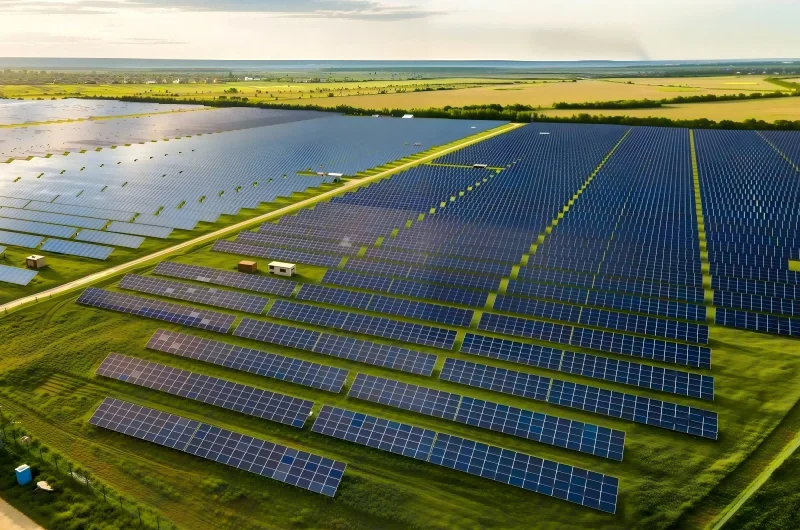
For solar farm operators, overgrown weeds are more than an eyesore—they pose a direct threat to your bottom line. Vegetation can significantly reduce power generation efficiency, while traditional control methods risk panel damage, soil erosion, and high costs. Therefore, implementing an efficient, safe, and sustainable specialized mowing solution has become critical for precise asset management and maximizing return on investment.
This guide provides a systematic analysis of the unique vegetation challenges at solar farms, the advantages of professional equipment, and practical advice for selection and maintenance to support your decision-making.
1. Why Solar Farms Require Specialized Mowing Solutions
The challenges of vegetation control in solar installations are unique:
- Power Loss: Weeds shade PV modules, reducing light absorption and causing measurable energy output losses over time.
- Safety Hazards: Tall, dry vegetation significantly increases fire risk. Dense growth also hinders safe site access for inspection and maintenance.
- Limitations of Traditional Methods:
- Manual Labor: Time-consuming, expensive, and unsustainable for large-scale sites.
- Herbicides: Long-term use can harm soil health, cause environmental contamination, and potentially corrode mounting structures.
- Standard Commercial Mowers: Often too large and cumbersome to operate safely under panel arrays, with high risks of panel impact or damage from thrown debris.
2. Core Advantages of Professional Solar Farm Mowers
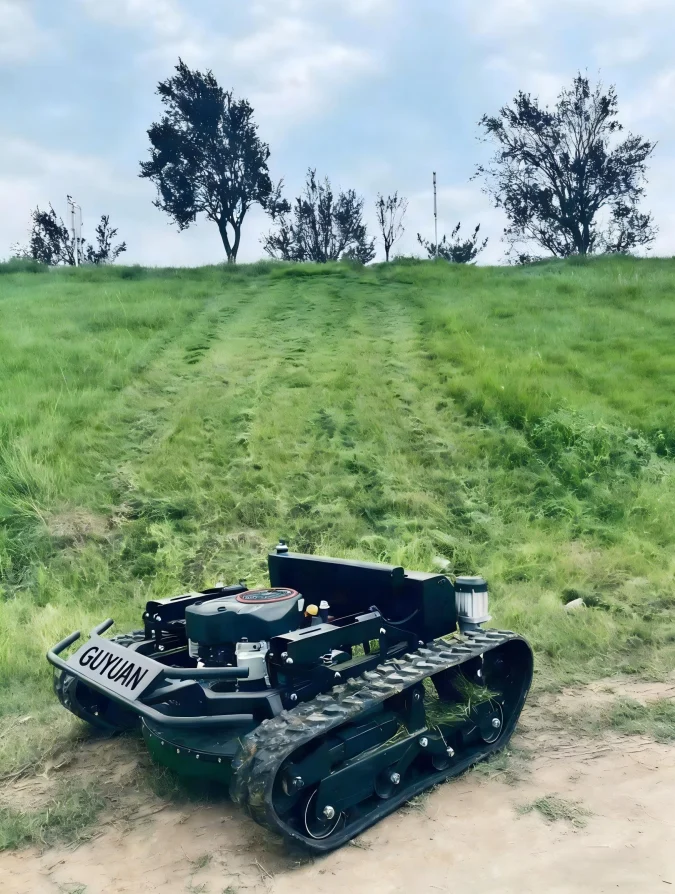
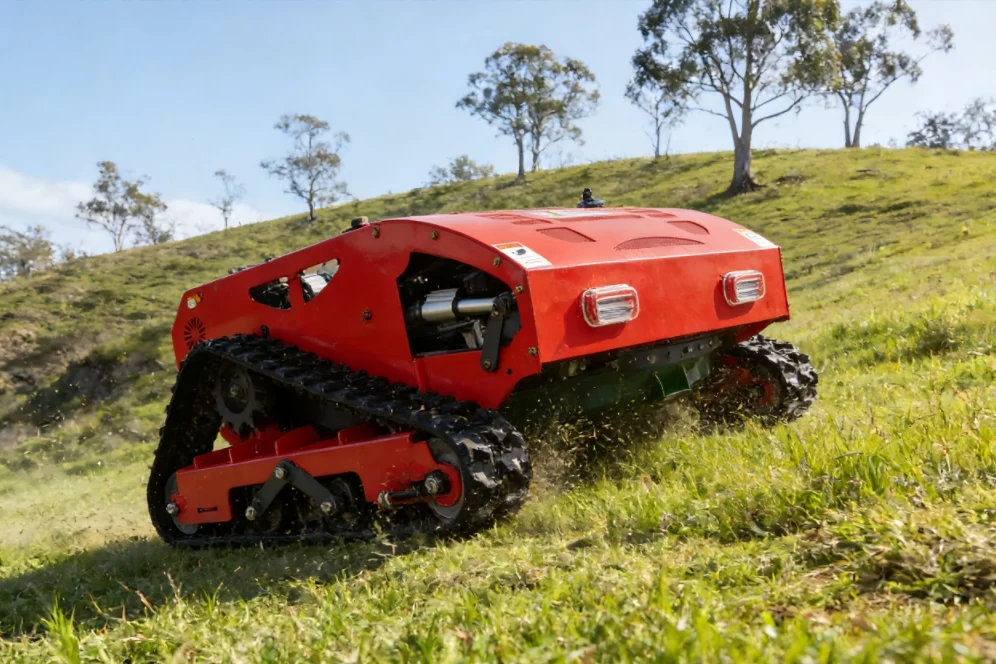
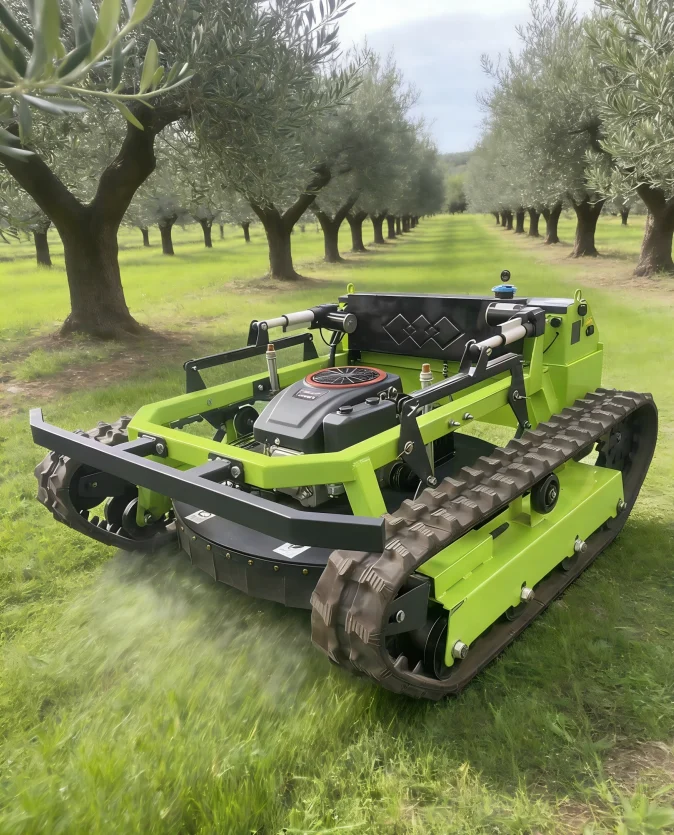
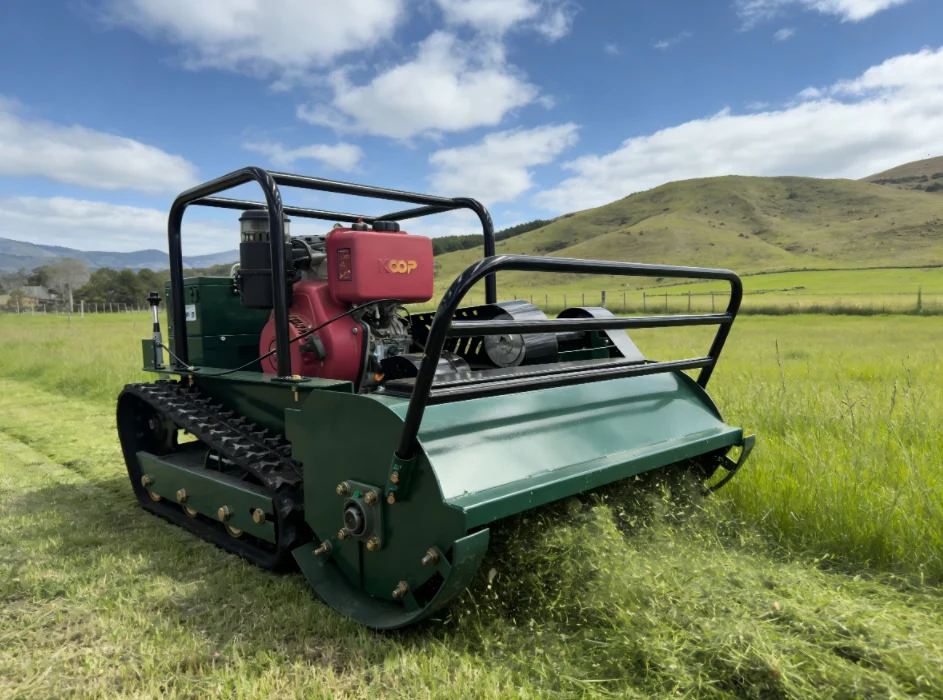
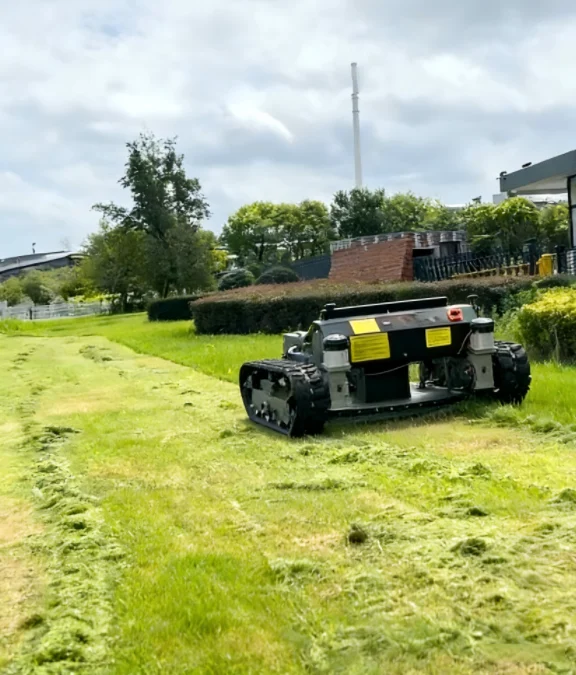
Dedicated solar farm mowers (such as low-clearance, remote-controlled, or autonomous robotic mowers) are engineered to address these specific issues. Their key advantages include:
- Ultra-Low Profile & Agile Design: Specially engineered to navigate seamlessly beneath solar panels, operating in clearance heights as low as 30-40 cm, achieving complete coverage where standard equipment fails.
- Comprehensive Safety Protection:
- Panel Protection: Features like protective shrouds, rubber-flap discharge covers, or specialized cutting systems minimize the risk of debris and impacts.
- Undercarriage Protection: Reinforced chassis are built to withstand the rough, uneven terrain commonly found on solar sites.
- Operator Safety: Remote-control or autonomous operation keeps personnel away from challenging terrain and potential hazards.
- Superior Terrain Adaptability: Robust off-road capabilities handle the slopes, rocky ground, and soft soil typical of solar farms, ensuring consistent operation and efficiency.
- Strong Long-Term Economics: While the initial investment may be higher, professional equipment drastically reduces long-term labor, maintenance, and potential revenue loss costs, delivering an attractive Return on Investment (ROI) over the asset’s lifespan.
3. Key Selection Criteria: How to Choose the Right Equipment
Select your mowing equipment with the same diligence applied to core solar components. Focus on these dimensions:
- Site-Specific Parameters: Accurately measure the minimum ground clearance under panels, the site’s maximum slope, the primary vegetation type (soft grass, tough brush, etc.), and soil conditions.
- Equipment Core Performance:
- Working Width & Efficiency: Match the working width to your farm’s size to balance throughput and maneuverability.
- Cutting Performance: Verify the machine’s capability to handle your site’s toughest vegetation.
- Power & Endurance: Electric (battery) models are quieter and emission-free, ideal for mid-sized sites. Fuel-powered models offer greater power and unlimited runtime for large-scale operations.
- Smart Features: Consider the need for GPS perimeter mapping, automated obstacle avoidance, and remote monitoring to enable semi- or fully autonomous operation.
4. Best Practices & Maintenance Tips
Proper operation and maintenance are essential for long-term equipment reliability:
- Operation Planning: Establish a regular mowing schedule to control weeds before they seed. Plan efficient mowing paths to optimize time and battery/fuel use.
- Operator Training: Ensure operators are fully trained on the machine’s features, especially safety protocols for slopes and complex terrain.
- Scheduled Maintenance: Adhere strictly to the manual. Key tasks include checking blade wear, tightening critical bolts, cleaning cooling systems, and maintaining batteries (if applicable). Perform thorough inspections before and after the peak mowing season.
5. The Future: Intelligent and Sustainable Solutions
Technology is driving solar farm vegetation management toward smarter, greener solutions. AI-powered vision systems, fully autonomous navigation, and clean-energy-driven mowing robots represent the future. Investing in a professional mowing solution is not just solving a current problem but also future-proofing your site’s operational intelligence and asset value.
Conclusion: Investing in a professional solar farm mower is a strategic decision that enhances site safety, energy yield, and long-term operational economics. By carefully assessing your needs, selecting matched equipment, and following disciplined maintenance, you can effectively manage vegetation risk and ensure your renewable energy asset delivers maximum value reliably.